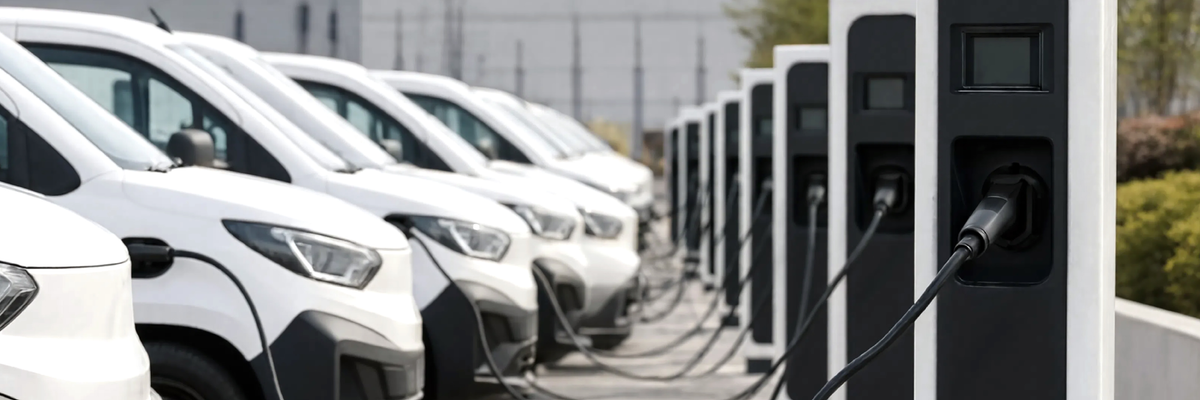
Shoreham Vehicle Auctions’ (SVA) Managing Director Alex Wright believes eLCVs are already proving highly effective for smaller, localised delivery operations, particularly in towns and cities where predictable routes and shorter daily mileage suit them best.
“On paper, vans should be the perfect vehicle for EV adoption,” he said. “A lot of urban delivery routes are predictable, vehicles return to base overnight, and operators are under growing pressure to reduce emissions in towns and city centres.”
He says this makes eLCVs particularly well suited to last-mile logistics, where operating patterns already support electrification.
“Smaller electric vans doing local parcel deliveries are where the technology works best today,” he explained. “If you’re operating at low mileages and overnight charging, the running costs can be very attractive as are the prices of used eLCVs currently, especially since the USA Iran conflict where diesel prices have risen dramatically.”
While Wright is confident in the direction of travel, he says adoption will vary significantly depending on operational demands.
“The direction of travel is clearly towards electrification,” he said. “But adoption will happen at different speeds depending on the operation. Urban delivery fleets are likely to lead the way because that’s where eLCVs already fit naturally into day-to-day use.”
However, Wright says there are still legitimate operational concerns preventing some larger fleet operators from transitioning more quickly.
“One of the biggest concerns for operators is productivity,” he said. “Delivery businesses operate on extremely tight schedules and any perceived reduction in efficiency can become a major issue. Operators want confidence that vehicles can complete routes consistently without disruption.”
Wright also believes there is a clear difference between how large fleets and self-employed operators approach electrification.
“For self-employed drivers and smaller operators, fuel savings come directly out of their own pocket, so there’s often a stronger incentive to reduce running costs,” he said. “That’s why some owner-drivers are often more willing to explore electric vans or plug-in hybrids.”
While uptake of new eLCVs is growing, Wright says high upfront costs remain a barrier for many operators compared with traditional diesel vans.
“New electric vans still carry a price premium, which inevitably slows adoption,” he said. “That makes the development of a healthy used eLCV market especially important, because that’s where many SMEs and owner-operators will eventually enter the market.”
As more electric vans enter fleets today, Wright expects the used market to strengthen over the coming years, although he believes it will take time before supply reaches meaningful scale.
“We’re seeing more eLCVs come through, but the used market is still in its early stages,” he said. “That will improve as volumes increase, giving buyers more confidence and more affordable entry points into electrification.
“The Driver and Vehicle Standards Agency’s (DVSA) announcement that zero emission vans weighing between 3,501kg and 4,250kg will officially transition into the Class 7 MOT testing regime is also helping to reduce operational friction for fleets considering the switch.”
He also notes that alternatives to diesel remain limited elsewhere in the van sector.
“There isn’t a major shift towards petrol or hybrid vans either,” Wright added. “For many operators, diesel remains the default today, which is why the transition to electric needs to be supported by the right infrastructure.”